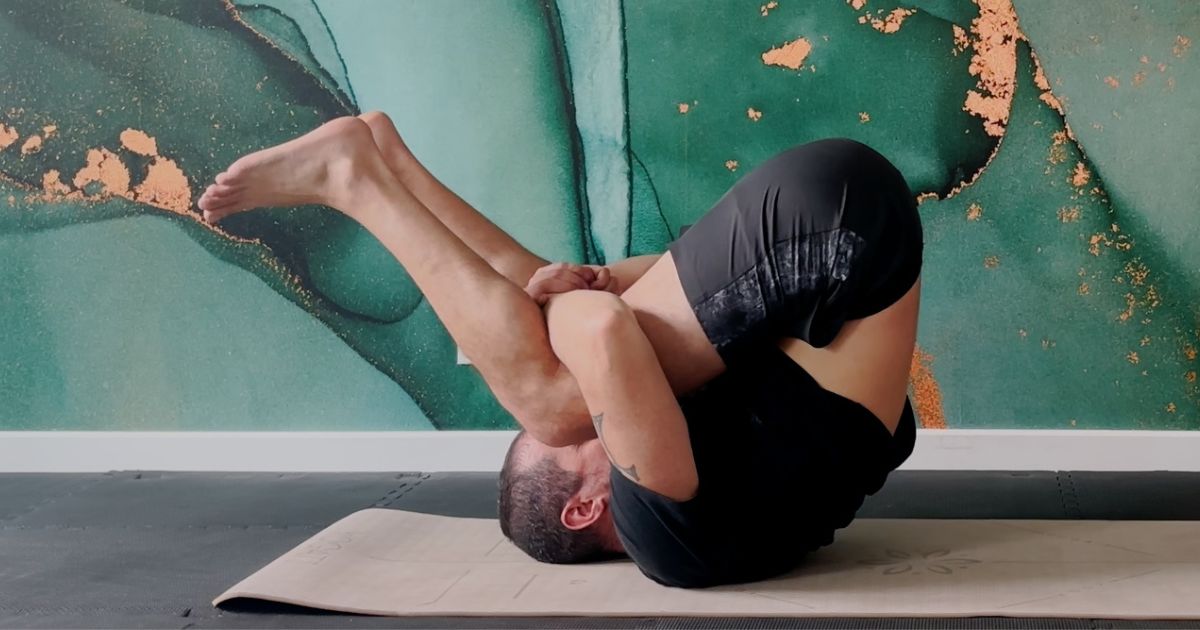
Heavy training compresses your spine. Every pull-up, every dip, every pressing movement loads the vertebrae, tightens the posterior chain, and shortens the hip flexors. Most athletes stop there — they finish the work and move on. This sequence exists for what comes after. Twelve postures. Twists, lateral extensions, full spinal decompression, and rest positions. Designed specifically for calisthenics athletes who want their training to be sustainable — not just intense.
WHY YOUR BACK NEEDS THIS
Calisthenics training builds real strength. It also creates real compression. The thoracic spine absorbs every pulling movement. The lumbar takes the load in every pressing and core exercise. The hip flexors shorten under sustained tension. Ignoring this doesn’t make you harder. It makes recovery slower and injury more likely. This sequence addresses all three areas systematically — from the upper back to the lower spine, from rotation to full extension and rest.
THE SEQUENCE
Cat-Cow & Thoracic Opening — Start here. Restore full spinal movement before targeting specific segments. Both flexion and extension, from cervical to lumbar.
Scorpion Stretch — A rotational release for the thoracic spine. Opens the chest and counteracts the forward pull created by ring work and pulling exercises.
Up Dog / Down Dog — Two positions that cover the full anterior and posterior chain. Up Dog extends the spine and opens the front body. Down Dog decompresses and lengthens the posterior chain.
Low Lunge Lateral Torsion — Combines hip flexor opening with lateral spinal rotation. Targets the compression that builds specifically from asymmetrical loading and sustained pulling work.
Pyramid — A deep hamstring and posterior chain release. Restores length in the structures that limit spinal mobility from below.
Triangle — Lateral spinal extension. Reaches the lateral chain and obliques — areas rarely addressed in standard recovery.
Forward Fold — Full posterior chain decompression. Gravity does the work here. Let it.
Camel — The deepest spinal extension in the sequence. Counteracts the rounded position that accumulates across a full training week.
Floor Spine Reset — A gentle supine reset for the lumbar. The floor provides traction. The body releases.
Butterfly — Inner groin and hip opening. Releases the structures that feed tension into the lower back.
Breathing — The sequence ends here intentionally. Breath is not a cool-down ritual — it is the mechanism that shifts the nervous system from effort to recovery.
HOW TO USE THIS
Practice this sequence after any upper body or full body calisthenics session. It works best when the muscles are warm. Each posture should be held long enough to create release — not rushed through. This is not stretching for flexibility. This is mobility work that makes your strength sustainable.
If you want to train strength and mobility together as a system — not as separate practices — Warrior Training Foundations is the program built for that.
👉 Join Warrior Training Foundations at strongyogi.net