
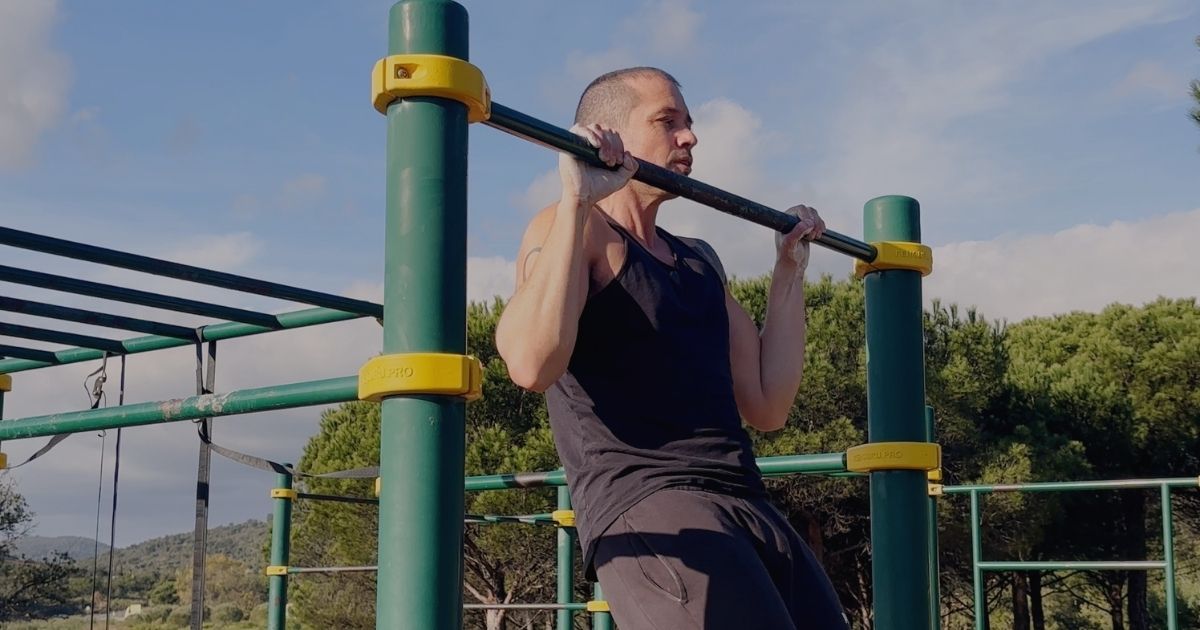
Being able to perform strict pull-ups is one of the clearest signs of real upper-body strength. Yet for many people, the first pull-up feels unreachable. The good news is that pull-ups are not about talent — they are about building strength progressively, with the right exercises and proper technique.
In this guide, you’ll learn how to go from 0 to 5 strict pull-ups using simple, effective progressions that develop strength, control, and confidence over time.
Start With the Dead Hang
The dead hang is the foundation of every pull-up. Hanging from the bar develops grip strength, shoulder stability, and body awareness. It also conditions your hands and forearms for supporting your full bodyweight.
When hanging, always wrap your thumb under the bar. This creates a stronger, more secure grip and reduces unnecessary strain on the forearms and elbows.
Jumping Pull-Ups to Build Confidence
Jumping pull-ups allow you to practice the full pulling motion while reducing the load. By jumping slightly to assist the movement, you can focus on learning proper body alignment and pulling mechanics.
Control the descent as much as possible. This will already begin to build the strength needed for strict repetitions.
Rows for Horizontal Strength
Rows are a crucial step toward pull-ups. Whether performed on rings, a bar, or a low surface, rows strengthen the upper back, arms, and core in a more accessible position.
Keep your body tight and your chest leading the movement. Rows teach you how to pull with intention rather than relying on momentum.
Assisted Pull-Ups for Vertical Strength
Assisted pull-ups bridge the gap between rows and full pull-ups. Using bands or a controlled setup, assistance allows you to practice the vertical pulling pattern while maintaining good form.
Avoid swinging or kicking. Assistance should reduce load, not replace control.
Common Mistakes to Avoid
Two frequent mistakes slow progress more than most people realize:
- Incorrect grip: Not placing the thumb under the bar weakens your grip and limits force production.
- Crossing the feet behind the body: This often creates unnecessary tension and destabilizes the movement. Keep the legs neutral and controlled instead.
Fixing these details can immediately improve strength and efficiency.
Grip Variations to Build Strength
Changing your grip width is a simple way to build strength and variation:
- Wide grip emphasizes the upper back and demands more pulling strength.
- Normal grip offers the best balance for most people.
- Narrow grip increases arm involvement and control.
Rotating between these grips helps develop balanced strength
Progress With Patience
Going from 0 to 5 pull-ups is not about rushing. It’s about showing up consistently, mastering each progression, and respecting proper technique. Strength builds when the process is followed with patience and discipline.
Related Articles
Stay Connected
Follow us on Instagram

Continue Reading: Full Body Calisthenics Routine for Beginners (4 Exercises)