
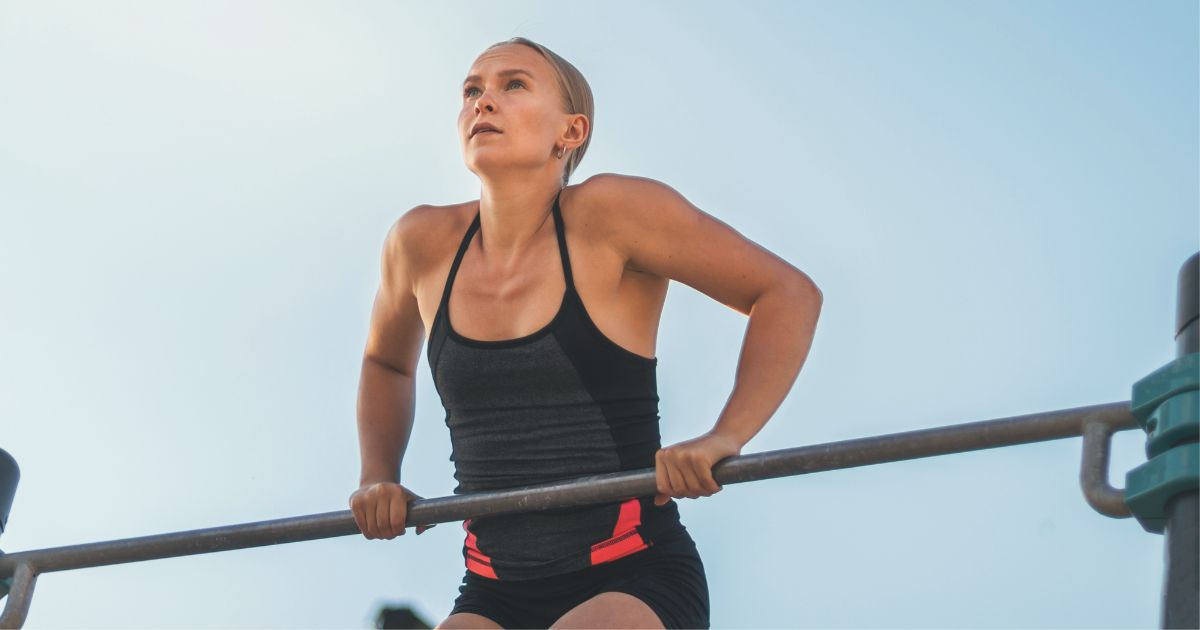
When we talk about the basic strength standards for calisthenics, pull ups and dips are the undisputed kings of upper-body training. These two movements alone reveal how strong, stable, and coordinated your body truly is. In fact, anyone serious about calisthenics should aim to perform at least 10 perfect bodyweight reps of each, with clean technique, full range of motion, and controlled tempo.
Building your training foundation around pull ups and dips ensures years of solid progress. These exercises strengthen the structure of your shoulders, elbows, chest, back, and core in a way that prepares your body for advanced skills like the muscle-up, the planche, weighted calisthenics, and high-level pulling and pushing variations. When you invest in mastering them early, everything else becomes safer, smoother, and more achievable.
Why Pull Ups and Dips Define Real Upper-Body Strength
They Build the Essential Patterns: Pulling and Pushing
Every upper-body skill in calisthenics comes from two fundamental patterns: pulling and pushing. Pull ups and dips are the purest, most efficient expression of these patterns. If you can dominate both, you automatically build the strength, stability, and body control needed for almost every other movement — from strict push-ups and rows, to muscle-ups and even the earliest progressions of the planche or front lever.
They Reveal Your Weak Links Instantly
Pull ups and dips expose weaknesses with brutal honesty.
- If your scapula doesn’t move well → your pull up tells you.
- If your shoulders lack stability → your dip collapses.
- If your core is disconnected → both variations fall apart.
These exercises don’t lie. They show you exactly which areas need more attention: grip strength, scapular control, elbow health, shoulder alignment, or core tension. Training them consistently forces your body to adapt and eliminates the imbalances that stop progression later.
Why Everyone Should Aim for 10 Perfect Reps
Ten Reps Is Not About Numbers — It’s About Standards
Ten solid, clean repetitions represent a level of strength that guarantees your joints, tendons, and muscles can handle bodyweight force with integrity. No cheating, no kipping, no half reps — full control from start to finish.
This standard ensures:
- strong connective tissues
- balanced muscle development
- improved shoulder and scapular mechanics
- enough force production for advanced work
- injury-resistant movement
Once you hit 10 perfect reps of pull ups and dips, you’re no longer just “training.” You’re building real capacity.
Why 10 Reps and Not 20?
Reaching 10 perfect repetitions builds the fundamental strength every calisthenics athlete needs. Going beyond that — toward 15 or even 20 strict reps — doesn’t necessarily make you “stronger” for advanced skills, but it shifts the type of strength you develop. Higher reps improve endurance and movement efficiency, which are useful for long sets or conditioning. But if your goal is to progress toward muscle-ups, weighted calisthenics, or skills like the planche or front lever, then increasing load and focusing on lower rep ranges is far more effective.
The key point is this: 10 reps set the standard, and anything beyond that depends entirely on your personal training goals.
Progression: The Key to Constant Strength Gains
Why Progressive Overload Matters in Calisthenics
In calisthenics, progress doesn’t come from repeating the exact same movement forever — it comes from gradually increasing the difficulty so your body keeps adapting. That’s the essence of progressive overload. The muscles, tendons, and nervous system need new levels of tension to continue growing stronger. Without progression, you simply maintain what you already have.
Unlike weightlifting, where you can just add plates, calisthenics requires creativity: changing leverage, angles, tempo, and grip positions to increase difficulty. When you understand how to manipulate these variables, pull-ups and dips become an entire training system, not just two exercises.
How Small Position Changes Create Big Differences
One of the strengths of calisthenics is that tiny adjustments completely change the stimulus:
Pull-Ups
- Wide-Grip Pull-Ups: Increase lat recruitment and reduce biceps assistance.
- Close-Grip Pull-Ups: More biceps, more elbow flexion strength.
- Archer Pull-Ups: Shift load to one arm → first progression toward one-arm pull-ups.
- Tucked Pull-Ups: More core demand, less swinging, more strict tension.
- L-Sit Pull-Ups: Stronger core compression + deeper shoulder engagement.
Each variation increases strength in a different part of the pulling chain.
Dips
- Forward-Leaning Dips: More chest, more anterior chain, closer to planche mechanics.
- Vertical Dips: More triceps and shoulders, great for strict form strength.
- Korean Dips: Massive shoulder extension strength; perfect for muscle-up transitions.
- Ring Dips: Instability → scapular control + tendon strength + deep ROM.
- Straight-Bar Dips: Best carryover to muscle-ups and explosive movements.
A small change in angle, grip, or equipment completely transforms the exercise — and your body adapts accordingly.
Why This Matters for Long-Term Progress
When your training evolves through progressive overload, your body becomes stronger in ways that support advanced calisthenics skills. You don’t just build muscle — you build:
- joint resilience
- tendon strength
- movement control
- deeper ranges of motion
- better stability under load
- higher neuromuscular efficiency
This is why someone with a solid dip, strong pull-up mechanics, and intelligent progressions always moves faster toward skills like muscle-ups, front lever, handstand push-ups, and planche work.
Final Thought
Pull ups and dips are more than basic exercises — they are the foundation of real upper-body strength in calisthenics. When you build your training around these two movements, you develop structure, control, tendon resilience, and the type of strength that actually translates into advanced skills. If you stay consistent, progress intelligently, and respect the fundamentals, your entire practice becomes stronger, safer, and more capable.
Take Your Pull Ups and Dips to the Next Level
If you’re serious about building real upper-body strength and mastering foundational calisthenics patterns, explore my program Master Your Bodyweight.
Inside you’ll find structured progressions, mobility preparation, and strength work that actually moves you forward.
Related Articles
Stay Connected
Follow us on Instagram

Continue Reading: Full Body Calisthenics Routine for Beginners (4 Exercises)