
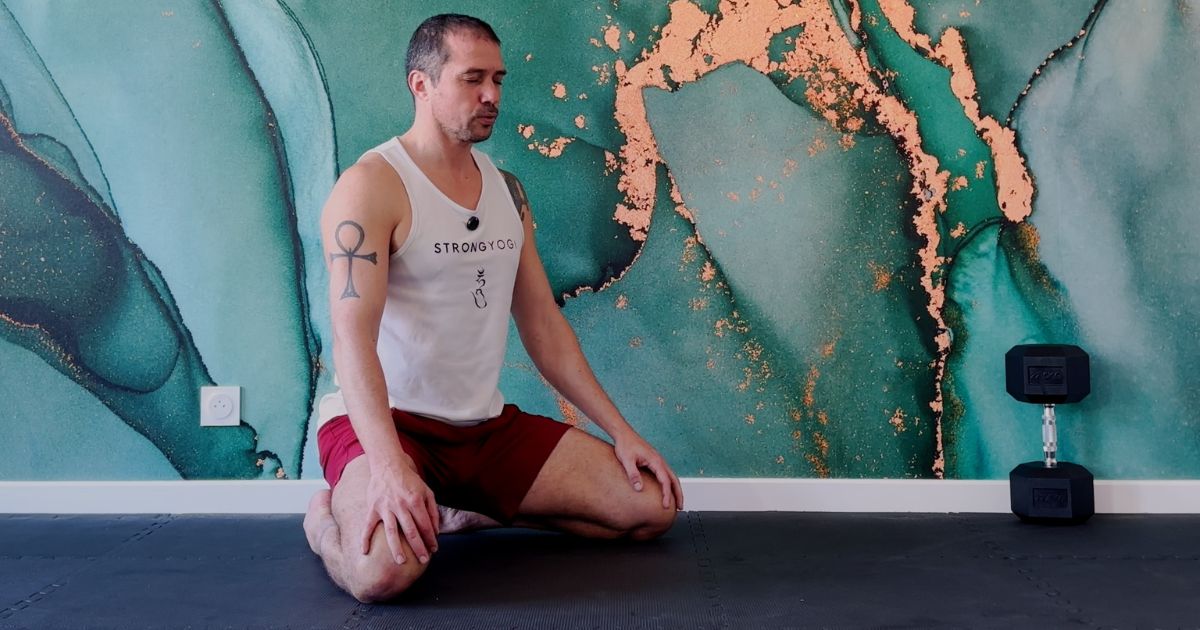
The squat is one of the most natural human movements, yet for many beginners it feels unstable, restricted, or uncomfortable. This usually has little to do with a lack of strength and much more to do with missing mobility, poor coordination, and a nervous system that does not yet trust the position. When approached correctly, the squat becomes a movement that restores confidence in the body rather than creating tension or frustration.
Beyond strength, the squat is a compound, closed-chain movement that involves the ankles, knees, hips, spine, and core working together. Because so many joints and muscles are engaged at once, the squat sends a strong signal to the nervous system that integration and control are required. For beginners, this makes it a foundational tool for rebuilding movement quality before adding load or complexity.
One of the first limitations that appears in beginners is restricted ankle dorsiflexion. Without sufficient mobility at the ankle, the body compensates by leaning forward, collapsing the knees, or overloading the lower back. Improving ankle mobility allows the squat to feel more balanced and upright, while also increasing proprioceptive feedback to the nervous system, which helps the brain perceive the movement as safe and controlled.
Practicing the deep squat with patience and conscious breathing helps restore a full range of motion that many adults gradually lose. When the deep squat is approached as a position to inhabit rather than a depth to force, it supports joint health, connective tissue resilience, and a calmer nervous system response. Over time, this position often creates a feeling of grounded strength and physical fullness, where effort is present without unnecessary tension.
The deep high lunge introduces mobility with stability by opening the hips while maintaining balance and control. This position challenges the body asymmetrically, which improves coordination between the left and right sides while strengthening stabilizing muscles. For beginners, it helps bridge the gap between passive mobility and active strength, preparing the body for more complex squat patterns.
Using the sumo deadlift pattern allows beginners to learn how to generate force from the hips while maintaining spinal integrity. This pattern reinforces proper loading mechanics and builds confidence in lower-body strength without excessive strain. From a physiological perspective, compound lower-body movements like this are associated with positive hormonal responses, supporting tissue repair, metabolic health, and long-term adaptation when practiced consistently.
Isometric work such as the horse stance develops a different but equally important quality. Holding this position builds structural strength in the legs and hips while demanding focus and steady breathing. This sustained effort trains the nervous system to remain calm under load, often leading to a deep sense of presence and embodied strength that goes beyond muscular endurance alone.
Regular squat practice, when combined with mobility and awareness, contributes to better hormonal balance and nervous system regulation. Rather than chasing maximal loads, beginners benefit most from controlled, full-range movement that supports insulin sensitivity, stress management, and a healthy balance between effort and recovery. Over time, this creates not only stronger legs, but a more resilient and responsive body.
The squat is ultimately a system-wide practice rather than a simple exercise. By prioritizing mobility, control, and conscious effort, beginners can use the squat to build strength, restore movement confidence, and cultivate a sense of physical plenitude. Strength grows naturally when the body feels safe, supported, and well-coordinated.
👉 If you want a personalized training program adapted to your level and goals, visit:
https://strongyogi.net
Related Articles
Stay Connected
Follow us on Instagram

Continue Reading: Full Body Calisthenics Routine for Beginners (4 Exercises)