
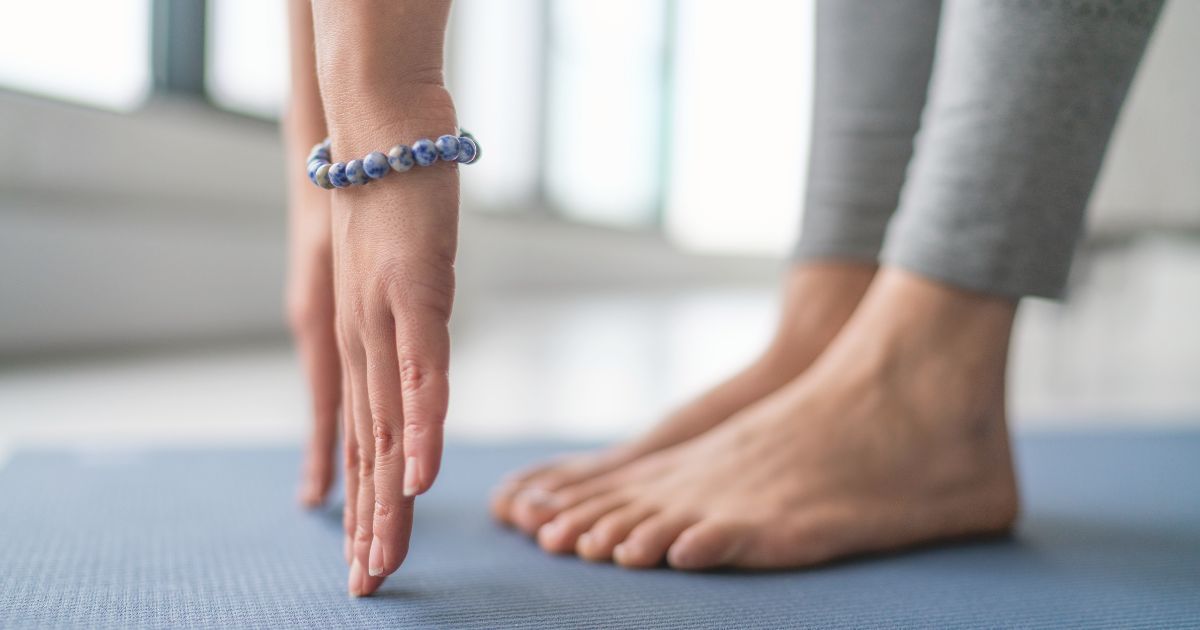
When I decided to start yoga without flexibility, my intention was simple: I wanted my body to feel better and I wanted to avoid getting injured. Years of stiffness had made even basic movements feel restricted, and I knew I needed something that could help me move with more ease, not more strain. Yoga gave me that entry point. It softened my body without pushing it, helped me understand where I was holding tension, and gave me a more attentive and patient way to approach movement. I didn’t need flexibility to begin; I needed a practice that allowed me to listen to my body before trying to change it. Yoga did exactly that, and starting from a stiff place wasn’t a disadvantage — it was the most honest beginning I could have had.
Yoga Helped Me Begin, but It Wasn’t Enough to Progress Further
With time, I began to notice something important about my practice: yoga had helped me feel my body in a way I had never experienced before, but it wasn’t giving me the deeper progress I expected. In the beginning, every class felt like a breakthrough. My hips loosened, my hamstrings softened, my breathing felt fuller, and I felt more present in my own skin. But after that initial phase, things slowed down. I was still practicing, still showing up, still moving with intention, yet my flexibility wasn’t evolving in the way I had imagined. This is a common experience for many people who start yoga without flexibility, because yoga builds awareness first, not deep range.
As I observed my body more carefully, I understood that yoga taught me awareness, presence, and patience, but it didn’t provide the kind of progressive loading that the body needs to create deeper structural change. I could breathe better, move better, and feel more connected, but my muscles weren’t getting stronger within those extended ranges. I wasn’t training the tissue under tension; I was simply visiting the shape and hoping it would adapt. And while this works at the beginning, it eventually reaches a limit.
Modern research supports this experience. Studies show that long-range strength training, eccentric loading, and active mobility create longer-lasting improvements in flexibility than passive stretching alone. When muscles learn to support a position through strength, not just relaxation, the body becomes willing to give more range because it feels safer doing so. This was exactly what I was missing. I could reach certain positions, but I couldn’t support them well. My mobility was there, but it wasn’t stable. Yoga had given me access, but not ownership.
When I incorporated mobility training and strength-based flexibility work — slow eccentrics, loaded stretches, long-range strength — everything changed. My body finally understood what I was asking from it. My hips opened in a more sustainable way, my hamstrings gained strength and length at the same time, and my joints felt more supported instead of overstretched. It wasn’t yoga versus mobility; it was yoga with mobility and strength. Yoga helped me understand my body; mobility helped me articulate it; strength helped me maintain what I gained. That was the turning point, and from that moment on, flexibility stopped being something I chased and became something I built.
The Combination That Works
In the end, what made the real difference was understanding that each method brought something essential to the process. Yoga helped me listen to my body and approach my limits with honesty instead of tension or fear. Mobility training taught me how to move with greater clarity and intention, giving my joints the freedom to explore new ranges without forcing them. Strength gave structure to everything I gained, allowing my body to support those deeper positions instead of collapsing into them. This is why you can confidently start yoga without flexibility: it teaches you how to feel your body before trying to transform it, and that foundation makes every step that follows more sustainable and meaningful.
Simple Ways Yoga Can Help You Improve Flexibility
What I eventually discovered is that the right mindset for flexibility work has nothing to do with pushing your limits and everything to do with being kind to yourself. Trying to force your body into the deepest version of a pose only creates tension and risks injury, while approaching the posture with patience allows the nervous system to trust what you’re doing. The real progress comes when you stay long enough to breathe, soften, and let the body understand that it doesn’t need to protect you. Flexibility grows when you give yourself the time to settle into a shape, not when you try to tear your way into it.
Another thing that changed my practice was learning to use Ujjayi breath in moments of resistance. Not as something mystical, but as a practical tool that helped me soften without collapsing. The gentle constriction in the throat created a steady, warm breath that made my nervous system feel safe, and when the breath became steady, my body followed. Using Ujjayi during even the simplest poses helped me relax the areas that felt stuck, slow down the impulse to force the stretch, and stay present long enough for real flexibility to happen. In many ways, the breath opened me more than the posture itself.
And finally, I discovered that consistency matters more than intensity. Practicing shorter sessions more often is far more effective than trying to stretch deeply once a week. The body responds to repetition and familiarity, not force. A few minutes of yoga each day — slow, patient, and aware — opened my flexibility more than any long session where I tried to “achieve” something. Yoga works when you let it unfold gradually instead of turning it into a performance.
What a Realistic Week of Flexibility Training Can Look Like
One thing that helped me progress was accepting that flexibility needs both depth and frequency. The body changes when you give it a clear signal a few times per week, but it also needs daily movement to stay fluid, lubricated, and responsive. A realistic week doesn’t mean stretching for an hour every day. It means choosing two or three sessions where you work with intention — longer holds, mindful breathing, a bit of loaded mobility — and letting those sessions create the deeper adaptations. Then, on the remaining days, you keep your body awake through short, simple routines: a few minutes of joint rotations, gentle flows, or light mobility drills that remind the tissues how to move without pressure.
This balance makes the practice sustainable. The focused sessions build new range, while the daily movement keeps that range alive. It’s the difference between opening a door once a week and keeping it slightly open every day. The body responds best when it doesn’t feel shocked or overwhelmed, and a weekly structure like this allows flexibility to develop without force. It gives your nervous system consistency, your joints the lubrication they need, and your mind a rhythm that feels natural instead of exhausting. Over time, this combination of deeper work and small daily maintenance becomes one of the most effective ways to stay open, healthy, and capable of moving well.
Related Articles
Stay Connected
Follow us on Instagram

Continue Reading: Wrist and Scapula Training for Calisthenics