
Introduction
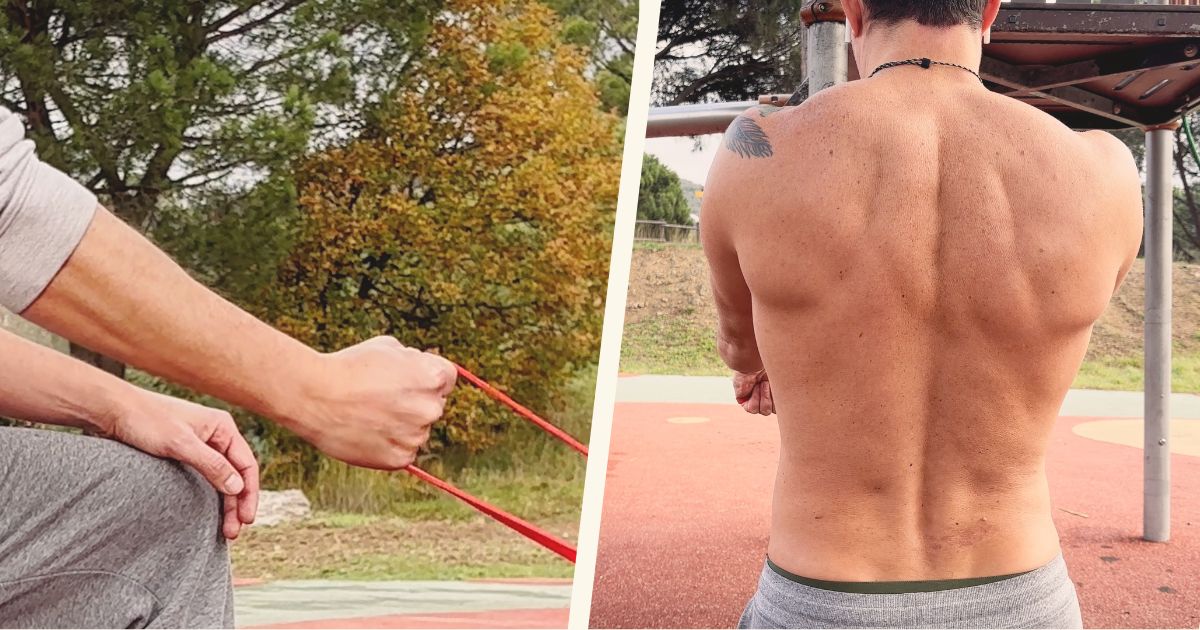
In calisthenics, your wrists and scapula are the foundation of nearly every movement.
If they are weak or stiff, your progress slows. If they are strong and mobile, your performance explodes.
Pull-ups, push-ups, handstands, dips, levers — all depend on wrist resilience and scapular control.
Yet most athletes skip this foundation, leading to pain, plateaus, or technique breakdown.
This article explains the essentials of wrist and scapula training, the types of movements you must practice, and the key exercises that build long-term strength and freedom.
Understanding Wrist Mobility: The Four Essential Movements
The wrists affect every pushing and inverted skill in calisthenics.
To perform safely and powerfully, you need mobility in all directions, not just flexion and extension.
1. Flexion
Bringing the palm toward the forearm.
• Important for handstands, planche leans, push-ups.
2. Extension
Bringing the back of the hand toward the forearm.
• Essential for floor-based strength work.
• The most commonly restricted range in athletes.
3. Radial & Ulnar Deviation
Side-to-side movement of the wrist.
• Crucial for grip strength and transferring force efficiently.
• Often ignored, but key for false grip, rings, and uneven loads.
4. Rotation / Circles
Circular articulation of the joint.
• Improves synovial fluid production and overall resilience.
• Reduces stiffness from repetitive loading.

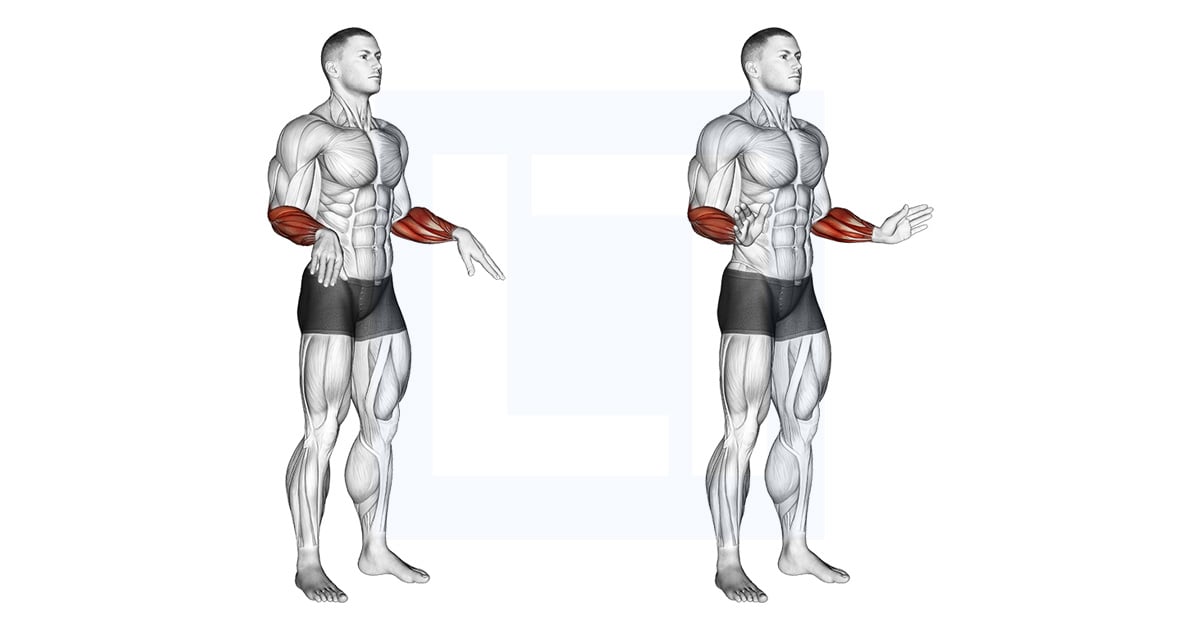
A complete athlete trains all four — every week.
Strengthening the Wrist: Band Work, Isometrics & Load Progression
Mobility without strength is incomplete. To protect your wrists from overload, you must add resistance, especially through controlled patterns.
A. Band-Resisted Wrist Work
Light bands create progressive, joint-friendly resistance.
• Wrist flexion with band
• Wrist extension with band
• Radial / ulnar deviation with band
• Slow rotational patterns
• Reverse curls with band tension
These keep the joint strong without compressing it, ideal for beginners and intermediate athletes.
B. Isometric Strength Holds
Isometrics build tendon resilience — the backbone of calisthenics strength.
• Palm presses (30–45 seconds)
• Fingertip holds on wall or floor
• Fist-to-open-hand transitions under load
C. Progressive Loading
Once strong with bands, you can progress to:
• Gentle floor leans (planche leans)
• Elevated wrist rocks
• Handstand weight transfer drills
• Compression + extension sequences
Consistency matters more than intensity. Ten minutes, three times per week is enough to transform your wrists.
The Scapula: The Engine of Your Upper Body Strength
Your scapula controls how your shoulders move, stabilize, and transfer power.
Without scapular strength:
- Pull-ups feel heavy
- Push-ups lose structure
- Handstands collapse
- Dips stress the joints
Understanding scapular mechanics is the key to powerful, safe calisthenics.
The Four Primary Scapular Movements
- Protraction → rounding / pushing away
- Retraction → squeezing shoulder blades together
- Elevation → shoulder blades up
- Depression → shoulder blades down
Calisthenics requires mastery of all four.
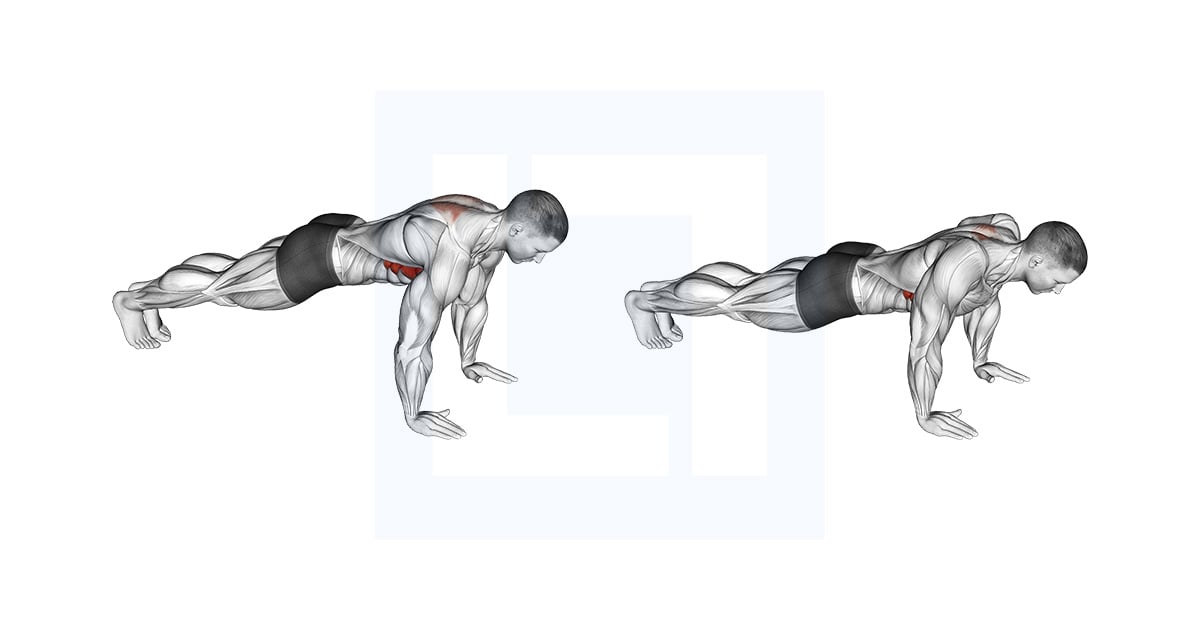

Essential Scapular Exercises for Calisthenics Athletes
A. Scapular Push-Ups
The foundation of scapular control in horizontal pushing.
• Builds protraction and retraction strength
• Improves hollow body endurance
• Prepares you for push-ups, planche work, and handstands
B. Pike Scapular Push-Ups
A more vertical pushing angle.
• Strengthens shoulder elevation control
• Essential for overhead patterns like handstands
• Serves as an antidote to “shrugging” under fatigue
C. Scapular Pull-Ups
The single most important drill for pull-up strength.
• Builds depression + retraction
• Improves shoulder health and reduces impingement
• Teaches lat activation before full pulling
A strong scapular pull-up = a strong regular pull-up.
D. Band Work for Scapula Stability
Bands allow safe volume and precision.
• Straight-arm pulldowns (lat activation)
• Band face pulls (external rotation + posture)
• Band rows with scapular focus
• Band Y-raises & T-raises
This improves shoulder mechanics and reduces the risk of elbow or shoulder pain.
Why This Matters: Performance, Technique & Longevity
If you want to progress in calisthenics, you need three things:
1. Strong joints
Your wrists and scapula absorb load before your muscles even activate.
2. Better technique
Proper scapular mechanics unlock clean reps and harder progressions.
3. Longevity
This training prevents the most common injuries in calisthenics:
• wrist inflammation
• shoulder impingement
• elbow strain
• compensations from weak scapular stabilizers
Mastering these foundations accelerates your evolution in strength, control, and awareness.
Conclusion
Wrist and scapula training is not “extra work” —
it’s the base from which all your calisthenics skills grow.
Athletes who train these two areas consistently move better, feel stronger, and progress faster with fewer setbacks.
If you want to build a powerful and resilient body, start here.
Want to follow today’s full flow?
Watch the Scapula & Wrist Activation video on YouTube.
Prep your foundation — prep your discipline.
Related Articles
Stay Connected
Follow us on Instagram

Continue Reading: Full Body Calisthenics Routine for Beginners (4 Exercises)